KatanaPIM — Scaling a PIM Platform for 60+ Clients
Led the React migration of a legacy .NET MVC frontend, replaced Webpack with Rspack for a 65% build-time cut, bumped TypeScript 5 → 7, and containerized .NET Core services for Linux deployment on a PIM platform serving 60+ enterprise clients.
What it actually looks like.
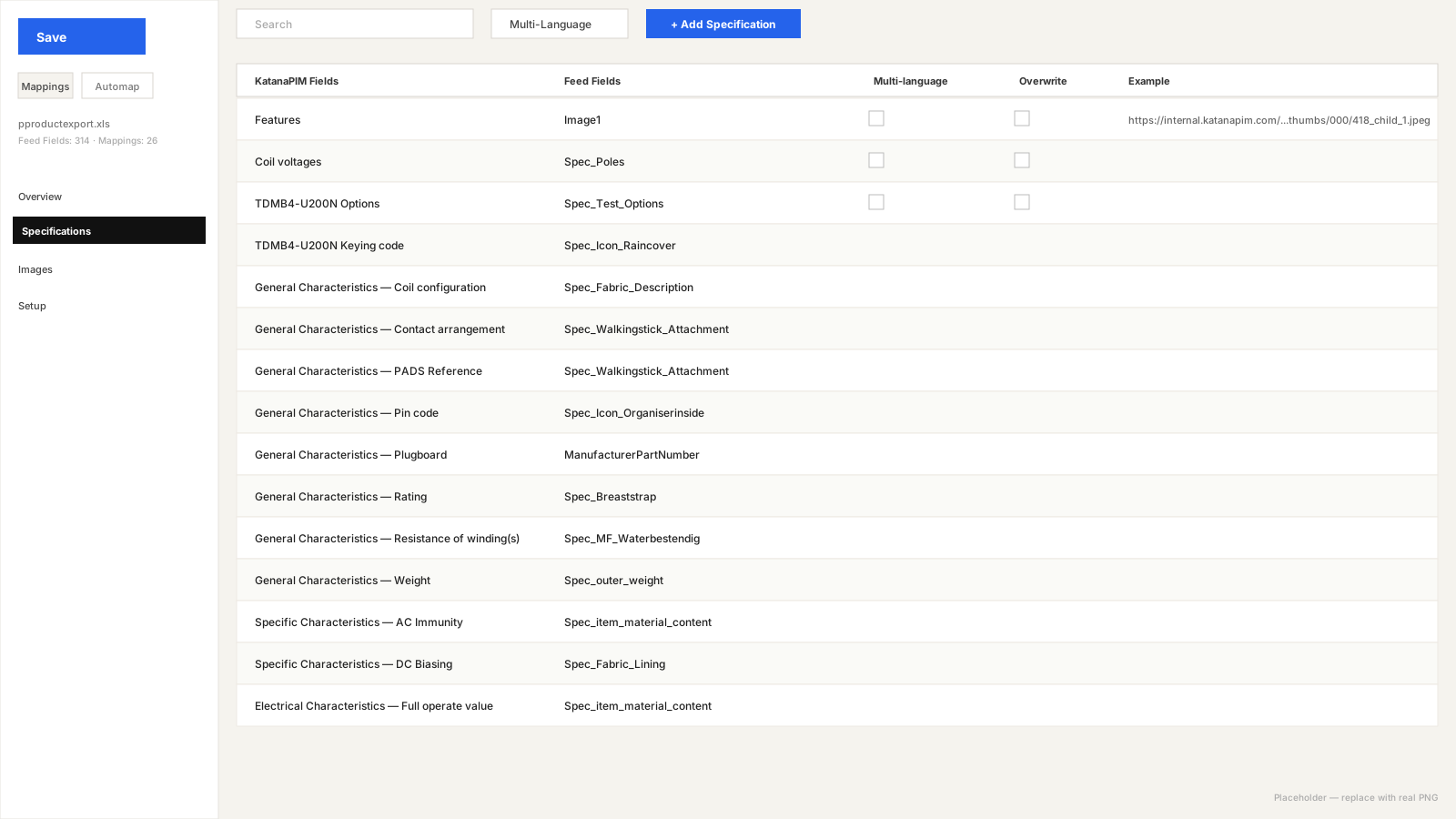
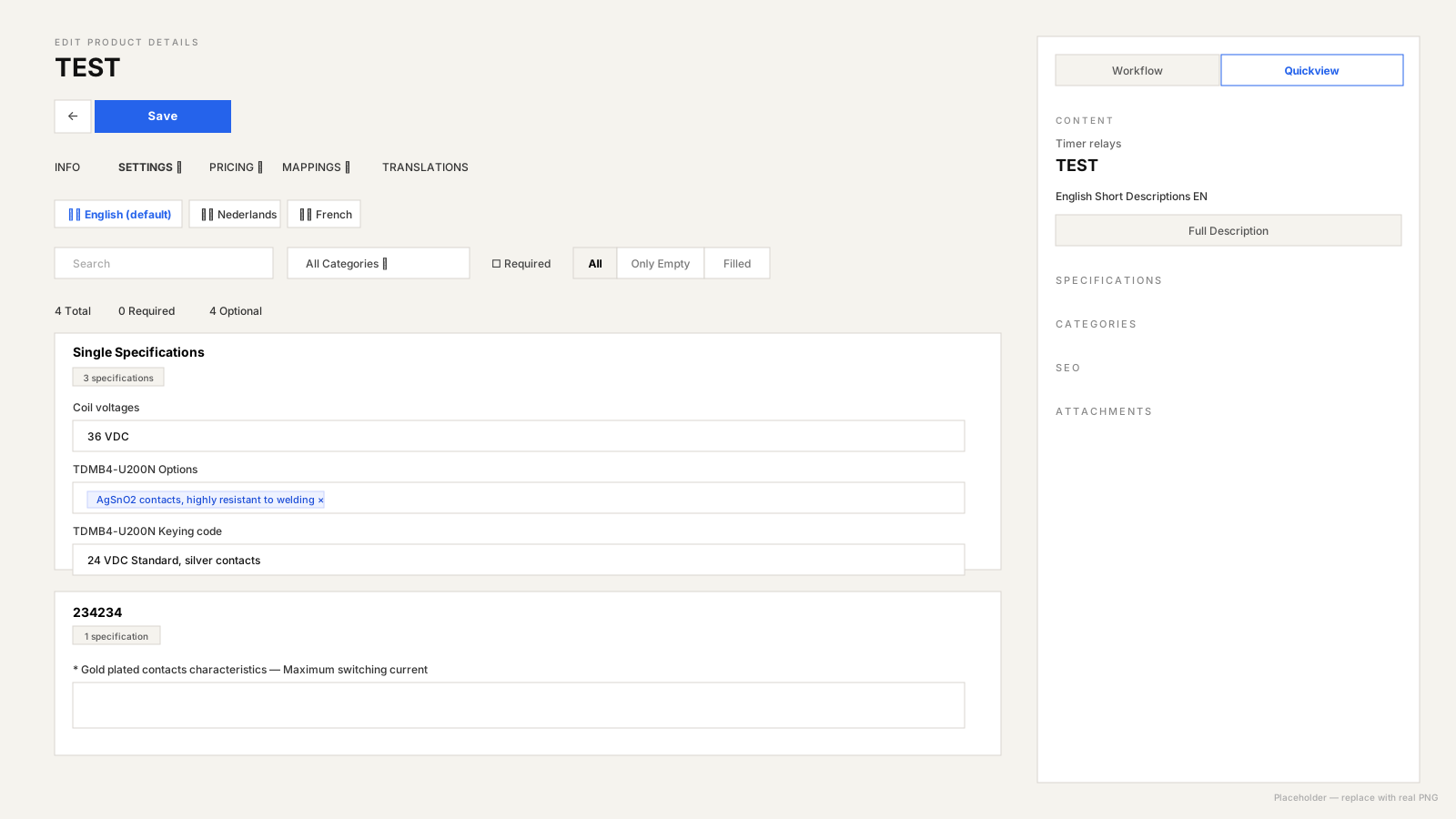
Shots from the product — interfaces I built and shipped into production, not mockups.
Context
KatanaPIM is a product information management platform that normalizes, enriches and distributes millions of product records across multiple e-commerce channels. By early 2023 the frontend was a maturing .NET MVC codebase with ad-hoc JavaScript — hard to evolve, slow to build, and expensive to onboard new engineers onto.
I joined as a senior developer to modernize the stack without disrupting the 60+ enterprise clients already in production.
Problem
- Frontend velocity was capped: every feature required touching Razor views, jQuery, and bespoke plumbing.
- Build times kept growing: Webpack builds pushed past the 3-minute mark, killing feedback loops.
- Deployment was brittle: .NET Core services were deployed bare-metal with manual runbooks.
- Scale anxiety: product data volumes were climbing faster than our tooling could keep up.
Approach
1. React migration, page by page
Rather than a big-bang rewrite, we ported screens incrementally to ReactJS behind the existing Razor shell. We co-located state with components using Jotai for fine-grained, testable atoms, and standardized server state on React-Query for caching, retries, and optimistic updates.
2. Webpack → Rspack
The biggest quality-of-life win. Drop-in swap for our config, plus small tweaks to the module resolution to get parity. First cold builds dropped from ~180s to ~60s — a 65% cut. HMR became instant, and CI builds freed up capacity across the team.
3. TypeScript 5 → 7 upgrade
Bumped the codebase from TypeScript 5 to TypeScript 7. Worked through the breaking changes — stricter type inference, updated lib.d.ts targets, and deprecated flags — module by module. Faster type-check on CI and cleaner error diagnostics in the editor paid back the migration cost quickly.
4. Containerizing .NET Core for Linux
I containerized the .NET Core services with Docker and aligned local + CI + production on Linux images. Deploys moved to GitLab CI pipelines, removing the “works on my machine” and cutting the cost of spinning up new environments.
5. PIM feature work
Built core PIM features: import/export workflows spanning multiple e-commerce platforms, bulk editing UIs over millions of rows, and rich relationship views for SKUs, variants and categories. Ran Scrum planning and epic meetings to keep backend + frontend + data teams aligned.
Impact
- 65% faster builds — happier engineers, shorter CI cycles.
- React now powers the critical PIM flows used by 60+ customers.
- Reliable, reproducible deploys via Dockerized .NET Core on GitLab CI.
- Upgraded to TypeScript 7 — faster CI type-checks and sharper editor diagnostics across the React codebase.
- Foundations in place for the next wave of product work — integrations, AI enrichment, and marketplace connectors.
Takeaways
- Incremental migration beats a rewrite when the business depends on the existing app every day.
- Build tooling is leverage — cutting 2 minutes off every build pays for itself within a week.
- Owning both frontend and deployment pipelines unlocked changes that would have stalled in silos.